Examining Contractual Provisions and Progressive Reward Structures in Mobile Entertainment Software
Willa Sullivan · Aug 15, 2026

Examining Contractual Provisions and Progressive Reward Structures in Mobile Entertainment Software
Contractual language in user agreements shapes access to layered reward systems across mobile gaming platforms, where developers embed specific provisions that govern progression through subscription tiers, battle passes, and loyalty programs. Data from industry reports indicate these clauses often determine eligibility criteria, payment schedules, and data-sharing requirements that unlock higher benefit levels. Researchers at various academic institutions have documented patterns where acceptance of arbitration terms or privacy consents directly correlates with advancement opportunities in freemium models.
Core Elements of Agreement Clauses in Portable Games
Portable gaming applications rely on end-user license agreements that outline conditions for feature unlocks, and these documents frequently specify how users must comply with ongoing obligations to maintain tier status. Observers note clauses addressing account termination, intellectual property rights, and modification rights often appear alongside sections detailing benefit pathways, creating direct dependencies between legal acceptance and reward access. In August 2026 regulatory updates from bodies like the Australian Competition and Consumer Commission highlighted similar structures in consumer digital services, emphasizing transparency in how such provisions affect user progression.
Tiered Benefit Pathways and Their Structural Dependencies
Tiered systems in mobile games organize rewards into sequential levels, where entry-level access requires basic agreement compliance while advanced tiers demand additional consents or recurring commitments. Figures from the Entertainment Software Association reveal that over 65 percent of top-grossing titles incorporate these pathways, linking clause acceptance to benefits such as exclusive content, accelerated progression, or personalized incentives. Those who have analyzed platform data observe that payment-related clauses often intersect with tier requirements, dictating whether users can convert in-app currency or receive enhanced returns on activity.
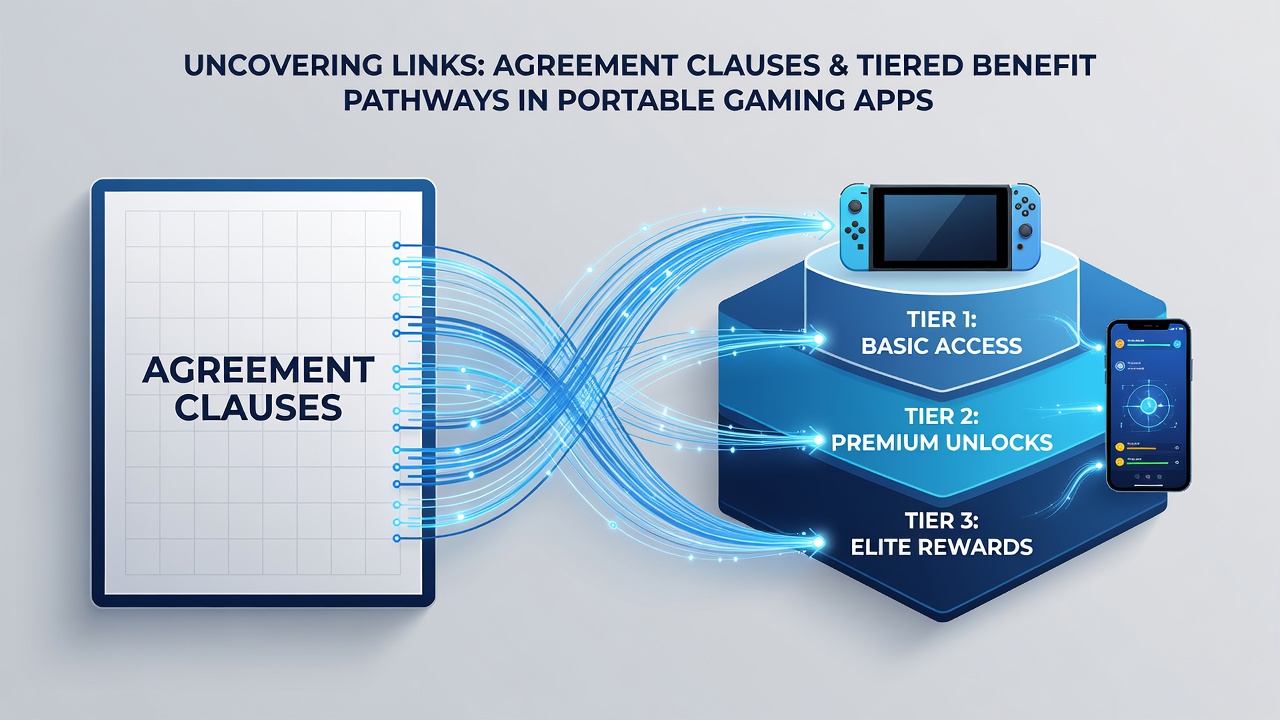
Developers implement these pathways through backend systems that verify clause adherence before granting elevated status, and studies from Canadian research centers on digital media have identified consistent correlations between specific contractual language and user retention rates at higher tiers. One analysis of popular titles showed how clauses on data usage enable tailored reward calculations, thereby influencing the pace at which players advance through benefit layers.
Interconnections Revealed Through Platform Analysis
Platform audits conducted in 2025 and early 2026 demonstrate that agreement clauses on dispute resolution frequently appear in sections preceding tier descriptions, establishing prerequisites for participation in premium pathways. According to reports from the Federal Trade Commission on mobile application practices, such positioning ensures users encounter legal terms before encountering benefit structures, which in turn affects enrollment in multi-level programs. What's interesting is how regional variations emerge, with European frameworks requiring clearer disclosures on how clauses impact tiered access compared to other markets.
Examples from widely used titles illustrate the pattern: users who decline certain data clauses encounter restricted progression, while full acceptance opens additional reward streams tied to in-game milestones. Industry organizations tracking these trends report that modifications to clause wording in August 2026 prompted several platforms to adjust their tier eligibility criteria to maintain compliance across jurisdictions.
Regulatory Context and Emerging Patterns in 2026
Government agencies outside the UK have issued guidance on digital service agreements, adn data collected through 2026 shows increasing scrutiny of how clauses intersect with benefit pathways in gaming apps. Academic papers published by institutions in Asia and North America document cases where tiered systems adapted following new transparency rules, resulting in revised clause structures that explicitly map user obligations to reward availability. Those monitoring these developments find that payment and consent clauses serve as gateways, with non-compliance halting advancement regardless of user activity levels.
Conclusion
Links between agreement clauses and tiered benefit pathways continue to define user experiences in portable gaming applications, as evidenced by ongoing platform analyses and regulatory statements through August 2026. Data indicates these interconnections influence access, retention, and feature availability across diverse titles, while external sources such as Federal Trade Commission guidance and reports from the Entertainment Software Association provide further context on evolving practices. Future adjustments in clause language will likely reshape how pathways operate within the mobile gaming sector.